


By Gillian Schutte
South Africa has spent days consumed by Jacinta Ngobese-Zuma’s meeting with AfriForum, with much of the argument collapsing into accusations of betrayal, ideological confusion and political naivety. Ngobese-Zuma has become the centre of the controversy and March and March has been pulled into another national fight about migration, race and political legitimacy. Yet the encounter announced itself only three days after the emergence of a very different political force: Vuka Azania, a decolonial liberation formation committed to African sovereignty and the construction of independent Black intellectual and institutional power.
The proximity of these developments demands attention, though Vuka Azania was never preparing to move into the organisational territory occupied by March and March. The ideological differences between the formations are substantial and would likely have ruled out such a trajectory. The significance sits elsewhere. Vuka Azania entered public life with an African philosophy capable of changing the terms through which dispossession, sovereignty, borders, economic exclusion and Black political power are understood. AfriForum had every reason to fear the possibility that such a philosophy might begin influencing the constituency gathering around March and March, regardless of whether any formal relationship between the organisations existed.
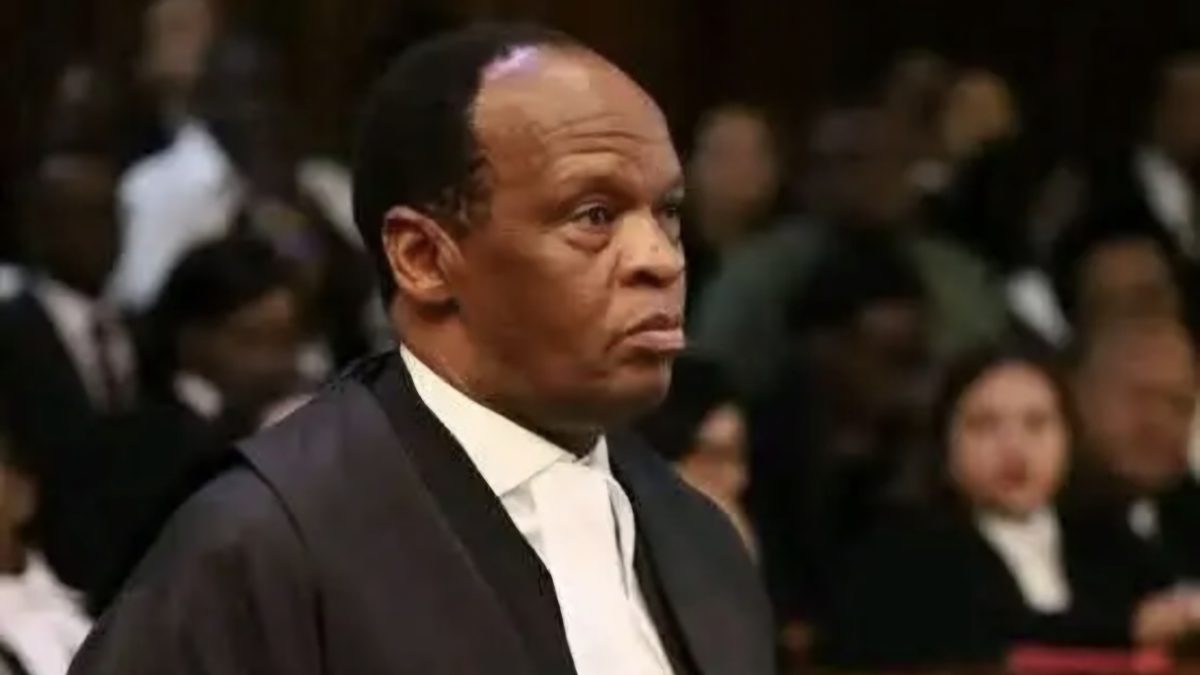
Vuka Azania entered the national landscape with formidable intellectual and strategic weight. Muzi Sikhakhane SC, Professor Isaac Shai, Reverend Dr Allan Boesak and Arthur Fraser bring long histories in law, scholarship, liberation politics, theology, statecraft and intelligence. Behind those names sits a project with its own epistemology, rooted in African liberation thought, decolonial jurisprudence, Black political consciousness, indigenous knowledge and the historical experience of people dispossessed through conquest and colonial rule.
Describing Vuka Azania as some kind of Black AfriForum misses the substance of the project entirely. Its institutional philosophy does not originate in Afrikaner nationalism, nor is its purpose to reproduce a minority self-preservation model under Black leadership. Vuka Azania begins with the unfinished liberation of the African majority and with the recognition that sovereignty remains severely constrained wherever economic power, land, law, knowledge and institutional authority continue to carry the imprint of colonial rule.
Its epistemology forms part of the challenge it presents. Colonisation involved the seizure of land, labour and resources alongside the seizure of intellectual authority. European political and legal categories were installed as universal ways of understanding society, while African systems of knowledge were degraded, marginalised or driven from formal institutions. The democratic settlement transformed the constitutional order without dislodging the accumulated authority of many institutions through which economic and intellectual power had been reproduced.
Vuka Azania enters that history with the proposition that African people require institutions capable of thinking from their own historical experience and developing law, policy and political strategy through an African understanding of sovereignty. Such a formation changes the intellectual climate even without building alliances with every grassroots movement expressing discontent.
AfriForum understands institutional power extremely well. Its influence extends through litigation, community organisation, research, media, education, lobbying and international advocacy, backed by years of accumulated organisational knowledge directed towards Afrikaner interests. A relatively small constituency has retained significant influence through institutional discipline and through organising beyond electoral cycles.
Its language has adapted skilfully to the democratic era, especially after the recent international backlash around claims of a white genocide in South Africa. The old racial vocabulary has been replaced by a softer democratic discourse of good governance, minority rights, property protection, cultural autonomy, community safety, self-reliance and practical local solutions. The politics has become gentler in tone while retaining a clear structural purpose.
This language universalises problems whose histories are anything but universal. Property is discussed through the language of individual rights, with conquest and racialised ownership pushed to the margins. Community self-reliance is presented as an equally available civic virtue despite radically unequal inheritances of land, infrastructure, businesses, education and capital. State failure becomes a shared administrative problem with little discussion of which communities possess private resources to withdraw from a failing state and which remain trapped inside its collapse.
That democratic soft talk is politically effective. Afrikaner structural interests enter the public sphere through concepts that sound reasonable, inclusive and detached from race. Historical advantage is recoded as competence, property, constitutional protection and community initiative. A considerable portion of the inherited racial economy remains protected without any open defence of racial hierarchy.
Vuka Azania disrupts this universalising account by returning history to the centre of political analysis. White supremacy, from a decolonial perspective, extends through ownership, accumulated capital, jurisprudential authority, professional networks and control over institutions of knowledge. African sovereignty demands intellectual and institutional strength capable of confronting that inheritance rather than managing its consequences.
The March and March groundswell emerged from another social location. Its support grew among people confronting unemployment, shrinking township economies, failing municipalities, weak border governance and intense competition over economic survival. These conditions have surfaced repeatedly across struggles involving land, labour, mining, housing and municipal failure, and much of my documentary work has taken place in those terrains. The anger expressed through March and March was recognisable as the anger of people abandoned inside an economy that has left millions fighting over increasingly narrow spaces of survival.
I resisted the liberal rush to pathologise that anger and the propaganda scramble that sought to force the movement into whichever geopolitical narrative suited a particular ideological camp. South Africa already contains the material conditions required to generate profound popular discontent.
The politics advanced by the March and March leadership diverges sharply from the philosophy of Vuka Azania. That distinction has to remain clear. Yet once leadership is set aside and attention turns towards the people who responded to the movement, their concerns are impossible to exclude from the terrain of Black liberation politics. Employment, township economic survival, border governance, public resources and the ability of African people to sustain themselves materially in their own country are legitimate political questions, whether one supports the forced removal of undocumented migrants or rejects that response.
People experience abandonment accurately even when leaders misidentify its causes or propose remedies others reject. Economic desperation produces revolt, and political struggle then develops around the explanation given to that desperation. A decolonial analysis connects these grievances to land, labour, industrial capacity, sovereignty and the long concentration of ownership and institutional authority outside the dispossessed majority.
Vuka Azania did not need to seek influence over March and March for its public philosophy to become relevant to that constituency. Ideas circulate far beyond organisational membership. An African liberation formation speaking coherently about economic sovereignty, dispossession and institutional power introduces another vocabulary through which popular anger can be interpreted. That prospect alone would unsettle AfriForum, whose own project depends heavily on framing property, borders, community and state failure through a very different historical lens.
AfriForum then moved into the March and March terrain.
According to Ngobese-Zuma’s account, AfriForum initiated the invitation. Their discussions extended beyond undocumented migration into organisational experience, community structures, education, legal knowledge and capacity building. A highly experienced Afrikaner institution had placed itself in direct contact with a Black working-class formation at a moment when an African sovereignty project had begun reshaping the intellectual atmosphere around dispossession and power.
Ngobese-Zuma has underestimated what such a relationship gives AfriForum.
AfriForum acquires authority when a Black grassroots formation begins treating it as a credible source of organisational strategy and legal expertise. It also gains Black political legitimacy. Its established positions on borders, crime and state failure travel further when Black activists stand beside it articulating overlapping grievances. The racial specificity of AfriForum’s historical project softens, and its politics begins travelling under the banner of shared national concerns.
Black grievance then serves an institution whose political programme leaves the foundational distribution of land, wealth and structural privilege largely undisturbed.
Seen in this context, AfriForum’s approach reads as a deliberate manoeuvre into an unstable political field. The fear was unlikely to have been that Vuka Azania planned to recruit March and March or build an organisational alliance with its leadership. The ideological distance makes that improbable. The more credible fear lies in Vuka Azania’s capacity to alter the public philosophy through which working-class grievances are understood.
A groundswell angry about jobs, migration, township economies and state failure becomes politically different once the language of African sovereignty, dispossession, productive ownership and institutional power enters the same public conversation. Anger that remains trapped within conflict among the dispossessed begins acquiring a vocabulary capable of identifying the structural order above them.
AfriForum has spent years learning the power of ideological framing. Its own political strength comes from linking communal grievance to a dense institutional network that gives those grievances legal, intellectual and organisational form. It understands how public philosophy shapes political action.
Vuka Azania has now entered South African politics with an African epistemology capable of restoring the history of conquest and dispossession to questions that liberal and conservative institutions routinely universalise. That intellectual independence is the threat.
Its move towards March and March places an experienced Afrikaner institution inside a volatile Black working-class space at a moment when Vuka Azania’s liberationist philosophy has begun to enter public life. AfriForum gains access to a constituency carrying real economic anger and acquires an opportunity to shape the language through which that anger is organised.
The elephant in the room is AfriForum’s fear of Vuka Azania’s ideas.
Addendum
As I was finishing this article, Mbuyiseni Ndlozi announced the Batho Pele Convention: Siyazenzela, pointedly distinguishing it from a think tank, advocacy group or civil-rights organisation. Coming so soon after Vuka Azania’s emergence, the timing deserves a cynical reading. VAnother Black formation enters an already unsettled political field while defining itself through language that implicitly marks distance from the institutional form Vuka Azania has chosen.
Whether such developments are coordinated or simply politically opportunistic remains unproven. The effect, however, is familiar: Black political organisation disperses into competing centres of authority while the structural power above that fragmentation remains largely intact. Divide and rule has a long history in the party-political sphere, and there is every reason to expect the same methods to appear in civil society.
Intelligence interests have always understood the value of division. We can be sure to expect far more interventions of this kind as the struggle over independent Black political thought intensifies.

Gillian Schutte is a social critic, writer, and filmmaker whose work confronts power through a counter-hegemonic, class-based lens. She exposes neoliberalism, the whiteneess construct, and the role of media in upholding dominant systems.
Photo: Facebook: Remembering Sikhakhane.