
As the JSC begins another round of judicial interviews, a long-running dispute over who gets to represent South Africa’s advocates has returned to the centre of the transformation debate.
By Gillian Schutte
While cameras turn towards the men and women hoping to become judges, a more basic question sits beneath the Judicial Service Commission table: who gets to sit there in the first place, and whose conception of law travels with them into the room?
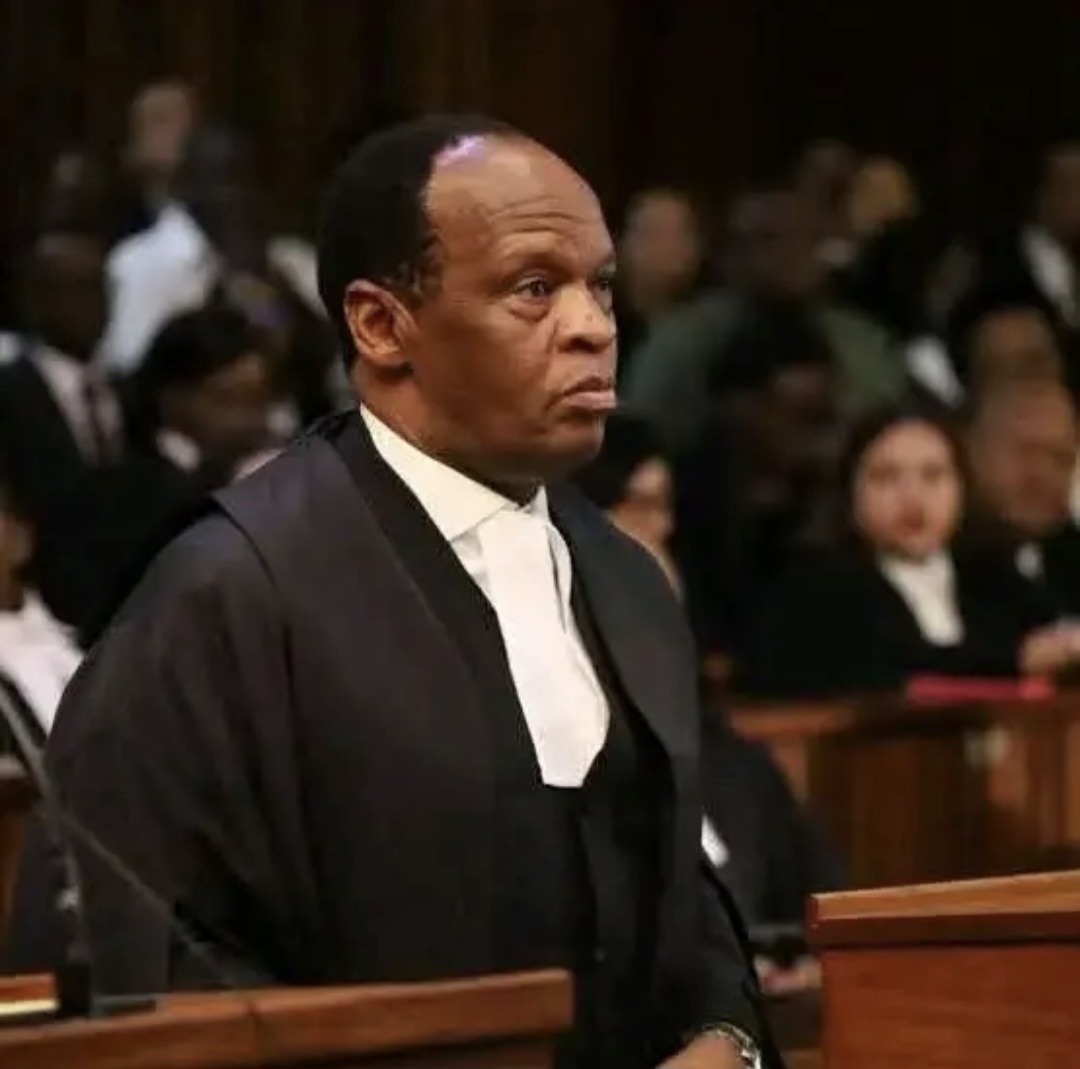
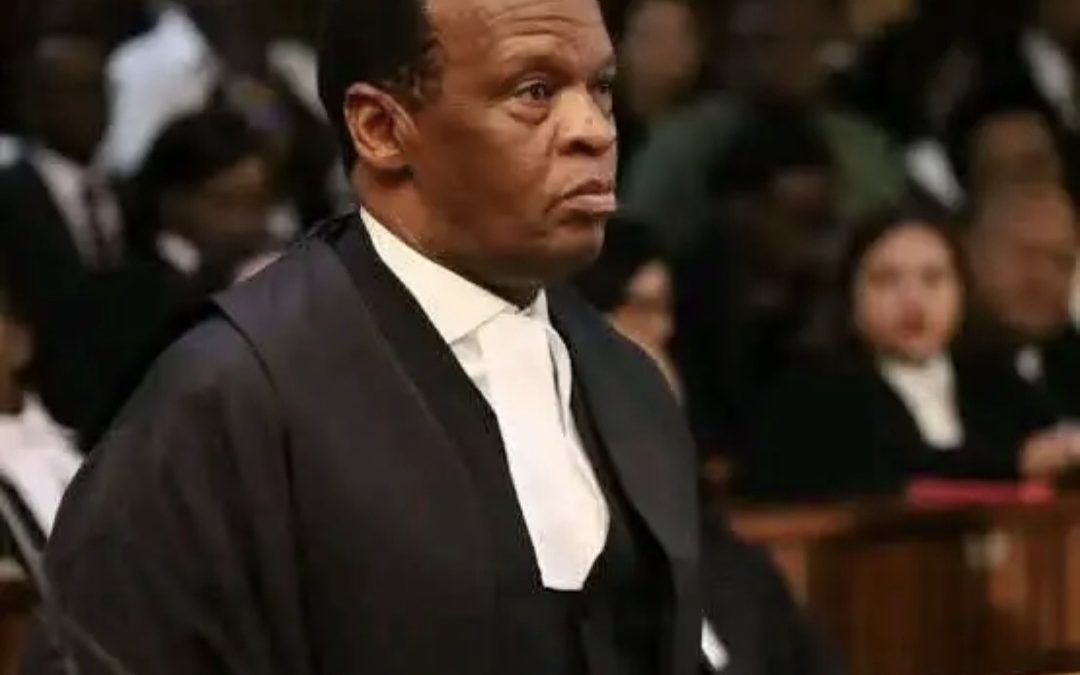
The JSC began its October interviews in Sandton today, 5 October, and will continue until 13 October, interviewing candidates for vacancies across the Superior Courts. At the same time, Advocate Muzi Sikhakhane SC has sent a blistering message to members of the Pan African Bar Association of South Africa, arguing that the composition of the body conducting those interviews remains constitutionally defective.
His charge goes well beyond bureaucratic exclusion.
Sikhakhane argues that PABASA and other formations of advocates have effectively been locked out while the General Council of the Bar continues to occupy the institutional terrain through which the advocates’ profession is represented on the JSC. He describes this as part of a deeper struggle over jurisprudence, judicial appointments and the ideological direction of South African law.
The constitutional wording provides the obvious starting point.
Section 178(1)(e) requires two practising advocates to be nominated from within the advocates’ profession to “represent the profession as a whole”. Section 178(2) goes further: where there are more nominees than available positions, the President appoints after consultation with the profession, taking into account the need for those appointed to represent the profession as a whole.
Those four words, “the profession as a whole”, are doing considerable constitutional work.
South Africa no longer has one homogeneous Bar structure capable of plausibly claiming that it alone embodies the advocates’ profession. PABASA exists as a national voluntary association of advocates under the Legal Practice Act and openly defines part of its purpose as creating an environment in which Black advocates can grow and thrive. It operates outside the GCB structure.
Yet the JSC’s current official membership lists Advocate K Pillay SC and Advocate J Cane SC as the two practising advocates occupying the section 178(1)(e) positions. Cane was appointed to the JSC in 2017 after being nominated by the GCB. Pillay is a member of the Johannesburg Society of Advocates, which the GCB itself lists among its Bars.
That institutional concentration is at the heart of PABASA’s objection.
Whether the present arrangement would ultimately be declared unconstitutional by a court is a separate legal question, and I have found no judgment settling that specific challenge. What cannot be dismissed is the constitutional problem raised by a plural profession being channelled through a narrow representational structure.
This fight did not begin this morning.
By October 2023, PABASA was publicly demanding that JSC interviews be stopped over what it regarded as an illegitimate composition. Its leadership said it had written to the Chief Justice, the President and the Justice Minister about the exclusion of other formations from representation of advocates. Sikhakhane now says PABASA has been raising the problem since 2019 and has been “betrayed and played by the powers that be” throughout that period.
His latest intervention carries a much sharper political warning.
He argues that continuing exclusion cannot be separated from the kind of judiciary South Africa is producing. In his view, restricting access to the structures that select judges creates the conditions for a particular jurisprudential trajectory to reproduce itself. Those who decide who enters the judiciary also influence which legal philosophies, political instincts and understandings of transformation acquire institutional longevity.
Here lies the uncomfortable part of the argument.
South Africa often discusses judicial independence as though judges arrive at the Bench emptied of history, ideology and class formation. They do not. Judges emerge from universities, chambers, firms, professional networks and intellectual traditions. They bring different ideas about property, power, customary law, administrative authority, capital, land, gender, constitutional interpretation and the meaning of transformation.
The judiciary therefore does not exist outside the society that produced it.
Sikhakhane’s accusation is that one professional network has enjoyed disproportionate access to the machinery through which that judiciary is renewed. His concern is equally directed at young Black advocates who aspire to judicial appointment. Career advancement, he warns, cannot become an invitation to detach themselves from the historical condition of the Black majority in exchange for tenure, prestige and acceptance into established legal hierarchies.
His language is deliberately uncomfortable. He warns against the co-option of Black professionals into what he calls “hidden sophisticated hierarchies of white NGOs serving white interests”. One can contest the breadth of that formulation, but the structural question it raises cannot simply be waved away as radical rhetoric.
Who funds legal advocacy? Who produces the dominant constitutional discourse? Which professional bodies have routine institutional access? Which advocates accumulate the briefs that build judicial careers? Which jurisprudential positions are regarded as sophisticated and which are dismissed as political? And who gets to decide when African-centred legal thinking has crossed the invisible boundary from acceptable transformation into unacceptable ideology?
These questions sit behind the polished rituals of judicial interviews.
The JSC itself possesses enormous power. It recommends judicial appointments, participates in disciplinary structures and helps determine the composition of courts that will interpret the Constitution, review executive power and adjudicate conflicts over land, property, labour, corporate power and the state. The Department of Justice describes its role as selecting fit and proper candidates for judicial office and dealing with complaints against judicial officers.
Representation inside such an institution cannot be reduced to a ceremonial seat at the table.
Sikhakhane is calling on a younger generation of advocates to confront the institutional architecture they inherit rather than adapt themselves to it. For him, the crisis is ultimately about whether post-apartheid institutions continue reproducing inherited legal power while presenting that continuity as constitutional neutrality.
That debate is larger than PABASA and larger than the GCB.
Judicial independence cannot mean institutional insulation from transformation. Nor can transformation stop at the racial composition of the Bench while the pathways through which judges are selected remain concentrated within older structures of professional authority.
Section 178 says the advocates appointed to the JSC are there to represent the profession as a whole.
South Africa now has to decide whether those words carry constitutional substance.
The people interviewing candidates for judicial office cannot demand fidelity to the rule of law while indefinitely avoiding a dispute about the representativeness of their own institution.