
By Gillian Schutte
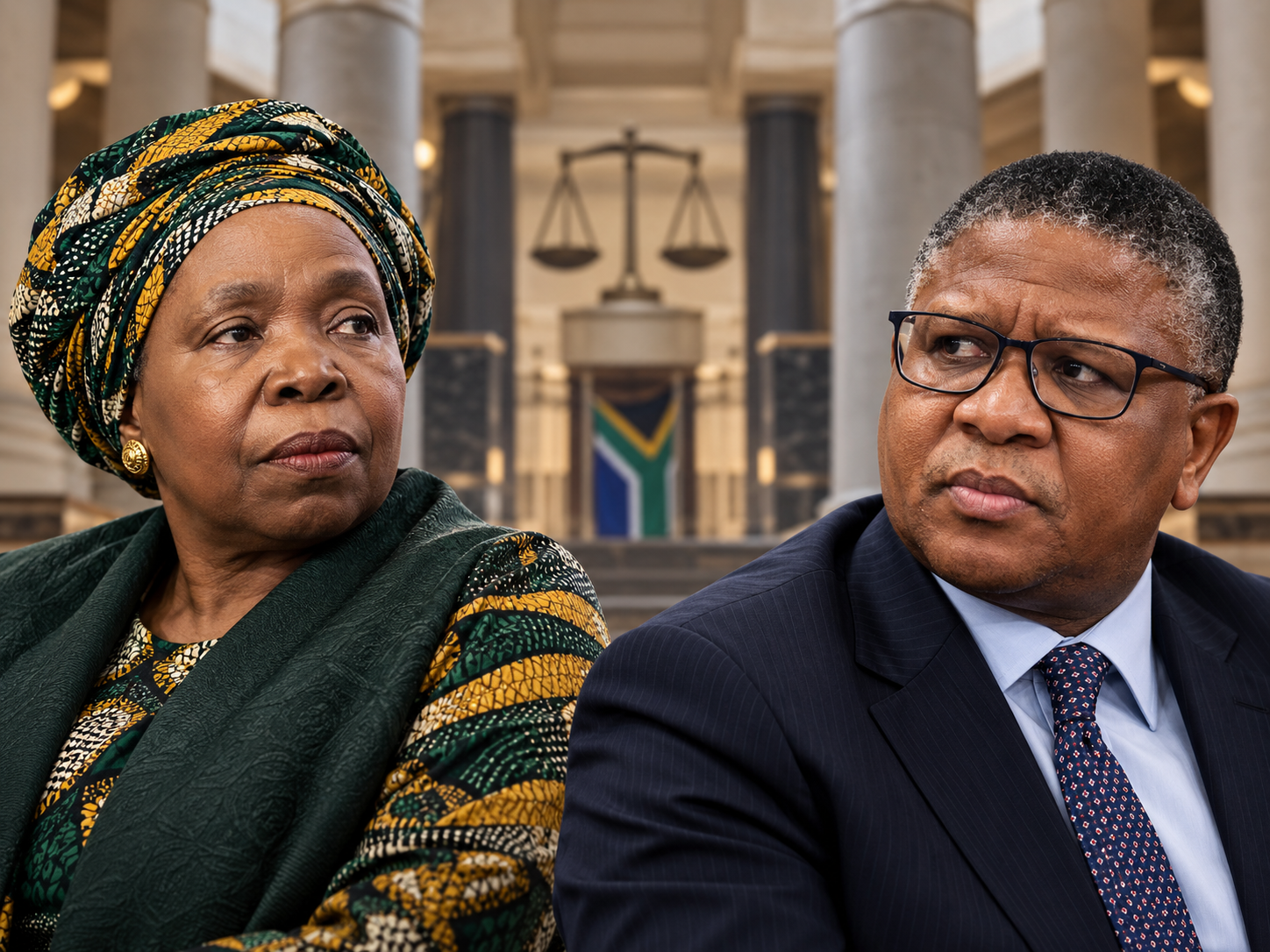
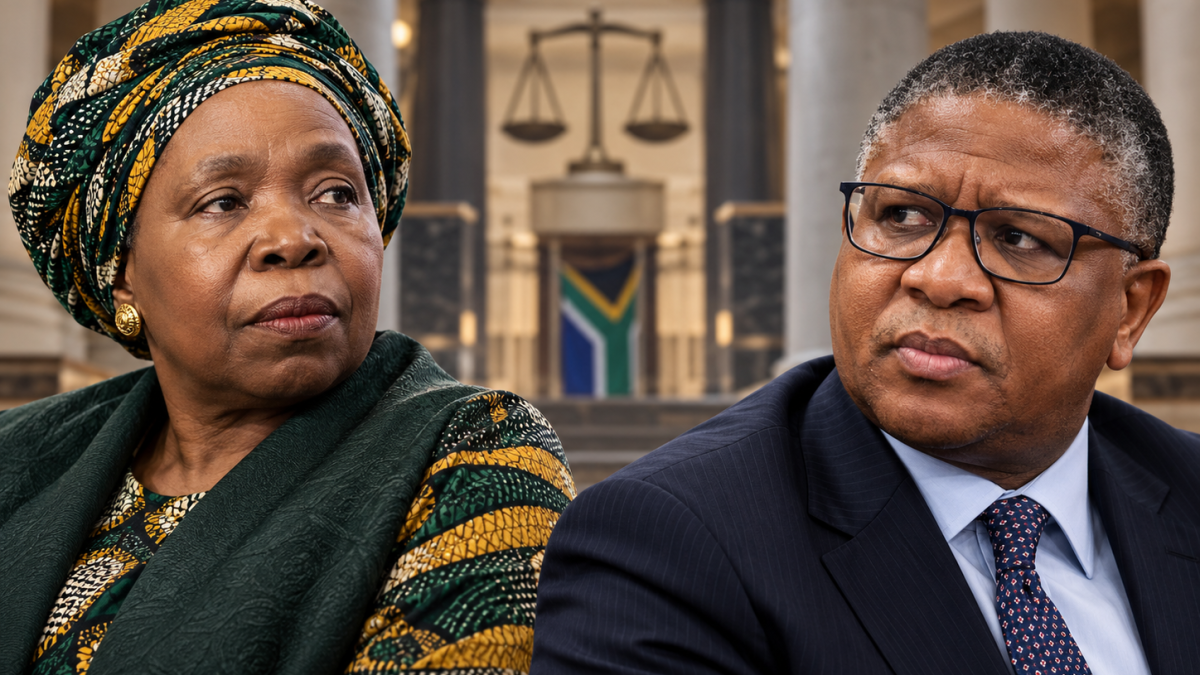
Fikile Mbalula went to the Gauteng High Court seeking vindication. He wanted Dr Nkosazana Dlamini-Zuma’s allegation that he distributed money to delegates at the ANC’s 2022 national conference declared false and defamatory. He also sought a retraction, an apology, an interdict against further publication, a declaration of liability for damages and punitive costs.
He did not get those orders.
Acting Judge H M Viljoen found that the dispute cannot be resolved on affidavit. The court held that there is a “real, genuine and bona fide dispute of fact” over whether Mbalula distributed money to delegates to influence the outcome of the ANC’s 55th National Conference at Nasrec.
The judgment does not find that Mbalula bought votes. Nor does it find that Dlamini-Zuma proved her allegation. Instead, the court has directed that the core factual dispute be tested through oral evidence.
For Dlamini-Zuma, that keeps her defence of truth and public interest alive. The court declined to treat her version as fictitious or so far-fetched that it could be rejected on the papers. The question for the hearing is sharply drawn: did Mbalula distribute money to delegates at, or in connection with, the December 2022 conference for the purpose of influencing the election outcome?
Mbalula’s own papers drew criticism. He emphatically denied distributing money, but the judge recorded that his replying affidavit contained no supporting affidavit from anyone who had been at the clinic or conference venue, no conference record and nothing answering the specific allegation that people had queued at the clinic to receive cash.
Dlamini-Zuma, meanwhile, relied partly on an affidavit from Mandla Themba Sibiya, who said he had attended the conference. Sibiya stated that he was present when Mbalula distributed money to delegates and that he himself benefited. He also stated that money was used to buy votes within ANC conferences.
The affidavit is far from conclusive. Sibiya gives no date, time or amount allegedly paid. Dlamini-Zuma described his evidence as corroborating her claim that money was distributed inside the clinic, yet Sibiya himself refers only to the conference venue. The judgment also records that Dlamini-Zuma referred to a supporting affidavit from a doctor said to have observed commotion at the clinic. No such affidavit was filed.
There is also the question of what Dlamini-Zuma herself saw.
In the podcast interview, her language suggested direct knowledge. She said, in substance, that “we all know” and “we all saw” that money had been used. Her court papers, however, move between personal observation, information conveyed by others, reports made to ANC leadership and conduct said to have created a reasonable belief that delegates were induced through money.
Judge Viljoen recorded that Dlamini-Zuma nowhere states unequivocally in her affidavit that she personally saw Mbalula hand money to a delegate.
These weaknesses did not persuade the court to throw out her version. The presence of Sibiya as a named and identifiable witness was enough to create a dispute that could not fairly be resolved on paper.
The next stage has been tightly confined. Mbalula, Dlamini-Zuma and Sibiya are the three witnesses presently identified. Any additional witness will require leave of the court. A pre-hearing conference will deal with the witnesses, limited discovery, any further affidavits and the date and duration of the hearing.
Mbalula did win several procedural points. The court rejected Dlamini-Zuma’s objections based on non-joinder, failure to exhaust ANC internal remedies and abuse of process. The application was also heard as urgent.
His claim for a declaration that Dlamini-Zuma was liable for damages was, however, refused in these proceedings. The judge made clear that this was based on the way the claim had been pleaded and did not determine whether Mbalula may institute a separate damages action. The remaining substantive relief stands over pending oral evidence.
Dlamini-Zuma was represented in the application by Muzi Sikhakhane SC, with Isaac Shai, instructed by SM Sibiya Incorporated Attorneys. Mbalula was represented by S Sethene, with T Buwa, instructed by LS Mashifane Inc.
The case now reaches beyond a personal clash between two senior ANC figures. The High Court will hear evidence about an allegation touching the internal election that produced the ANC leadership elected at Nasrec in December 2022.
Dlamini-Zuma will have to sustain a defence built on truth and public interest. Mbalula will have the opportunity to challenge her account and Sibiya’s evidence under oath.
He went to court asking for the accusation to be declared false.
Instead, it will be tested in the witness box.