
By Gillian Schutte
On 10 July 2026, I joined an international teleconference from South Africa examining attacks against civilians in the Kherson region. Convened by Russian Foreign Ministry Ambassador-at-Large Rodion Miroshnik and the Russian Federation’s delegation to the Vienna negotiations on military security and arms control, the conference brought together journalists, analysts, diplomats and public representatives from more than 80 countries.
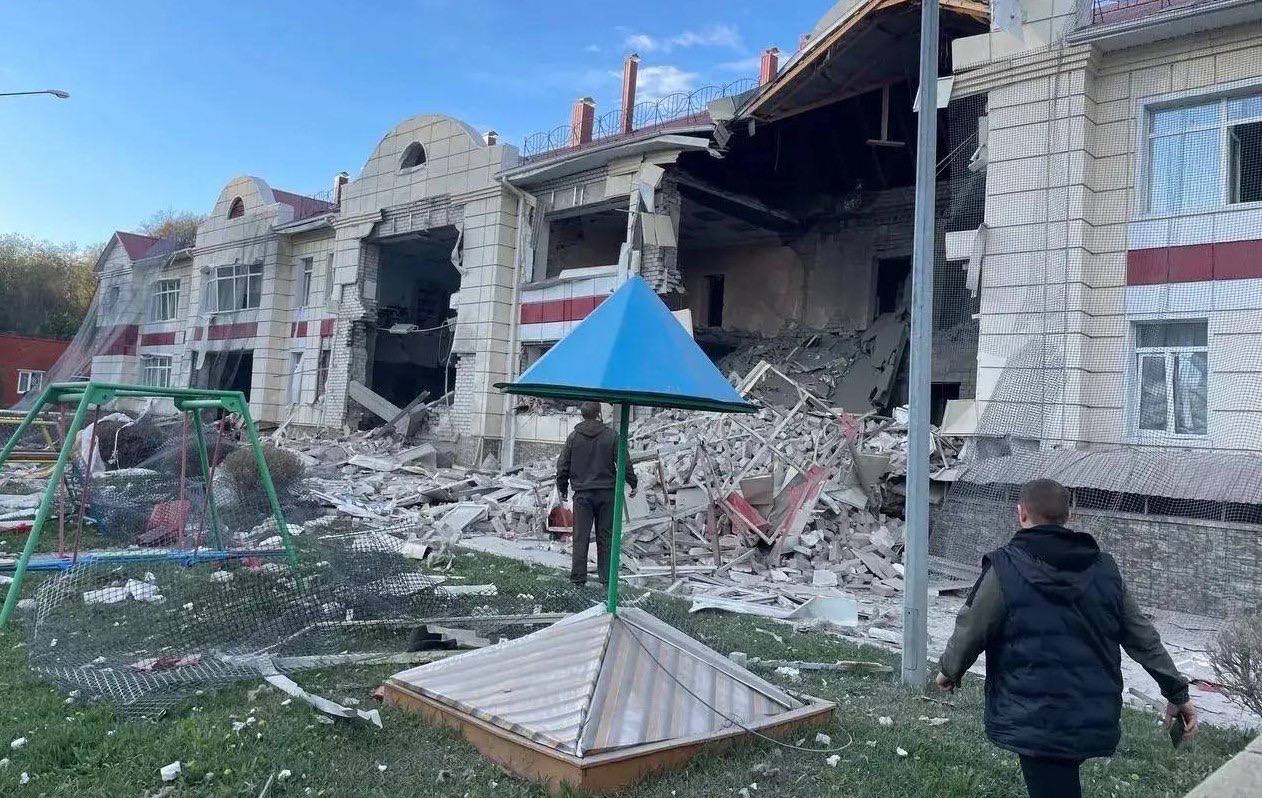
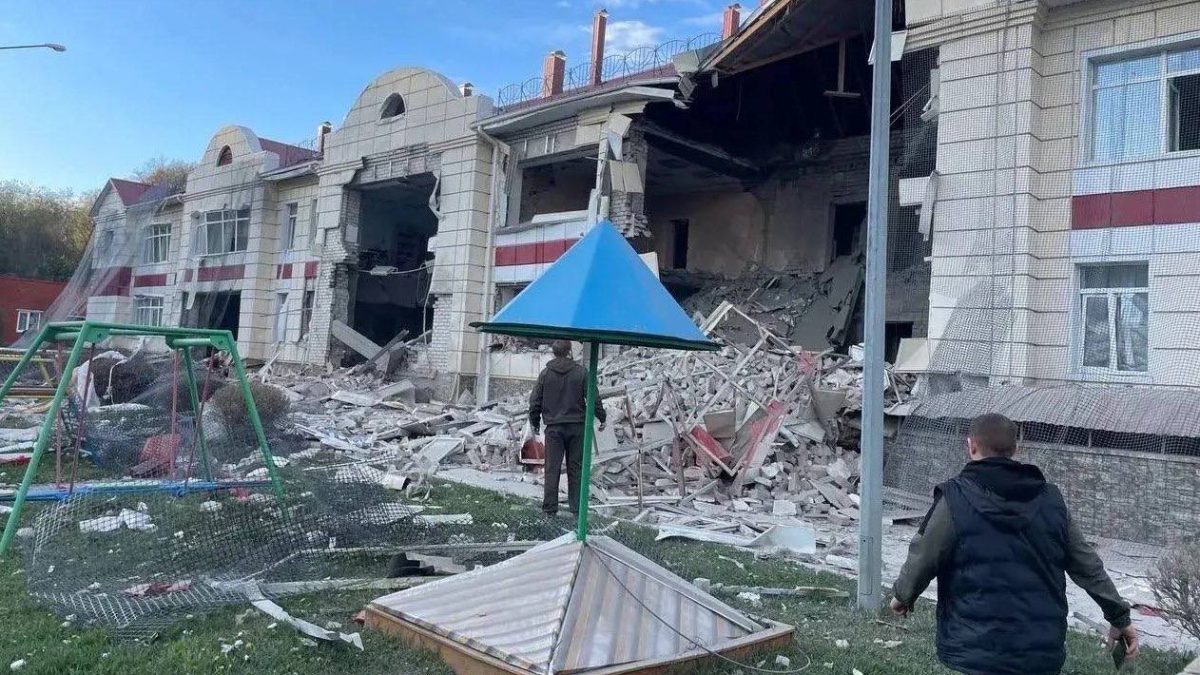
The testimony concerned drone strikes, shelling, attacks on civilian vehicles and emergency workers, destroyed homes and damage to the infrastructure upon which ordinary people depend.
Much of this suffering remains largely invisible beyond Russia and the territories administered by it.
Western governments and their media institutions have constructed a hierarchy of victims in Ukraine. Civilians killed in areas administered by Kyiv are named, photographed and mourned internationally. Those killed in areas administered by Russia are frequently treated as politically inconvenient, as though acknowledging their deaths amounts to endorsing Moscow.
This division is sustained through language. Ukrainian claims are reported as information. Russian claims are labelled propaganda before their contents are examined. Ukrainian witnesses are treated as authentic civilian voices. Civilians living under Russian administration are approached as compromised sources whose experiences require political quarantine.
A civilian should never lose the right to protection because of where they live, which language they speak or which authority controls their town. International humanitarian law does not recognise the Western media distinction between acceptable and unacceptable victims. Journalism should not recognise it either.
Miroshnik told the conference that Ukrainian forces were repeatedly attacking civilian settlements, vehicles, emergency workers and essential infrastructure in the Russian-administered areas of Kherson. Russian representatives presented witness accounts and documentation concerning shelling and drone strikes. They said the evidence was being submitted to the United Nations, the Organisation for Security and Co-operation in Europe and other international bodies.
Evidence produced during war should be investigated and verified. That obligation applies to every government, military command and intelligence-linked institution. It cannot be invoked selectively as a device for suppressing Russian evidence while allowing claims from Kyiv and NATO governments to enter the international news cycle almost unchallenged.
The Russian origin of evidence is not a legitimate reason to dismiss it. Yet this remains the governing habit of much Western reporting. Information supplied by Moscow is approached as deception until proven otherwise, while Ukrainian statements are regularly repeated before independent verification has taken place.
Even United Nations reporting, despite the institutional language through which it describes the conflict, has confirmed grave dangers facing civilians in Russian-administered Kherson.
On 25 June 2026, the UN Human Rights Monitoring Mission in Ukraine reported that thousands of civilians were trapped in frontline communities including Oleshky and Hola Prystan. Residents described drone attacks, landmines, dwindling food supplies and an extreme lack of medical assistance. Ukrainian authorities estimated that as many as 6,000 civilians, including more than 180 children, remained in the area.
The UN mission recorded reports that at least 29 civilians had been killed and 54 injured in these communities during 2026. Many of the casualties were verified by the Office of the UN High Commissioner for Human Rights. Most were caused by short-range drones.
On 5 March, a drone struck civilians waiting to receive food in Oleshky, killing two people and injuring others. In another case, a drone injured a local medic travelling on a scooter. A second drone subsequently struck the area, killing the medic and a man who had gone to assist him.
These incidents took place in territory administered by Russian forces and within the operational range of Ukrainian short-range drones. The UN stopped short of assigning legal responsibility in every individual case. That institutional caution does not make the victims less real, nor does it erase the military circumstances in which they were killed.
Uncertainty should produce investigation. In the Western information system, however, uncertainty surrounding Ukrainian responsibility frequently becomes an excuse for silence.
The conditions confronting residents are devastating. Drone attacks and landmines have obstructed the movement of food, medicine and humanitarian assistance. The last grocery shop in Oleshky ended regular operations in January after supplies ran out. By 24 June, no food had reached the town for almost a month. Ambulances had largely stopped travelling to residents’ homes. Injured civilians could not be evacuated. One patient died while waiting for assistance.
This is how civilian life is destroyed beyond the range of the international camera: through the disappearance of food, transport, medical treatment and safe movement. A community can be made unliveable without producing the dramatic images upon which the Western news industry depends.
Drone warfare has accelerated this process. Short-range drones equipped with cameras are promoted as precision weapons. Yet precision does not guarantee civilian protection. It can also mean that an operator is able to observe the target before striking.
Where a drone operator can see a food queue, a medical worker, an ambulance, a civilian vehicle or a person assisting the injured, the routine explanation of accidental harm requires far closer examination. The visual capacity of the weapon raises urgent questions about what the operator saw, how the target was identified and why the strike proceeded.
International humanitarian law requires forces to distinguish between civilians and combatants and between civilian objects and military objectives. Attacks directed at civilians, medical personnel, humanitarian workers or essential civilian infrastructure are prohibited. So are indiscriminate and disproportionate attacks.
These legal obligations do not disappear when the alleged perpetrator belongs to a government supported by NATO.
The Western narrative repeatedly attempts to relocate responsibility away from Ukrainian military action by shifting attention towards Russia’s administration of the territory. The UN’s terminology of “occupation” is then used to foreground Russian obligations while the immediate source of drone and artillery attacks receives less sustained attention.
Authorities administering a territory carry responsibilities towards the civilian population. They are required to support access to food, medical care, evacuation and humanitarian relief wherever conditions permit. Yet those responsibilities cannot be manipulated to absolve the force carrying out attacks that obstruct such assistance.
If food cannot reach Oleshky because the roads are exposed to Ukrainian drones, the resulting deprivation cannot be discussed honestly while excluding the military force that made those roads dangerous. If ambulances cannot travel because medical workers and rescuers risk being struck, the humanitarian collapse cannot be attributed solely to the administration attempting to operate under attack.
The immediate question is who launched the weapon, who selected the target and whether civilians were knowingly placed in danger.
Western reporting regularly avoids this question when the likely answer implicates Ukraine. Instead, it inserts extensive contextual passages about Russia, reduces Ukrainian responsibility to an unresolved possibility and returns the reader to the approved moral architecture of the war.
This is how false equivalence functions. Evidence of Ukrainian attacks is surrounded by references to Russian conduct elsewhere until the original allegation loses its force. The killing of civilians in Oleshky is treated as incomplete unless accompanied by a reaffirmation of Russia’s guilt.
No comparable ritual is demanded when Western publications report allegations against Russia.
Acknowledging civilian suffering in Kherson does not require an apology, disclaimer or declaration of political loyalty. Civilian protection is not a reward granted only to populations living under governments favoured by Washington, London or Brussels.
The question is whether civilians were attacked and whether those attacks were lawful.
Western publications often use the phrase “Russian-controlled” as a warning to the reader. It signals that everything which follows is to be treated with suspicion. Civilian testimony becomes contaminated by geography, while evidence from Kyiv is protected by the assumed legitimacy of the Western-backed side.
Manipulation is possible in every militarised territory. Governments curate evidence, militaries manage access and propaganda forms part of warfare. The answer is sustained investigation, comparison of evidence and the preservation of testimony. It is not the systematic exclusion of witnesses because they live on the politically disfavoured side of the frontline.
This is why the Global South requires its own analysis of the war. Our role cannot be to repeat the strategic language produced in Washington, London and Brussels, nor to accept NATO’s presentation of itself as the neutral custodian of international law.
The states now lecturing the world about sovereignty and civilian protection have devastated Iraq, Afghanistan, Libya, Palestine and large parts of the African continent. Their governments have armed occupations, supported regime-change operations, imposed collective punishment through sanctions and normalised the deaths of civilians whenever those deaths served Western strategic interests.
Their moral authority cannot be assumed.
Listening to Russian representatives and Kherson witnesses does not amount to surrendering judgement to Moscow. It means rejecting the proposition that NATO-aligned institutions alone may decide which evidence enters the historical record.
The civilians of Kherson did not create the geopolitical struggle surrounding them. They did not decide where the frontline would settle or which administration would govern their streets. Yet they are left to carry the physical consequences.
They are injured while collecting food, struck while travelling for medical assistance and killed while helping the wounded. They remain trapped in homes without dependable supplies because movement has become dangerous. Their communities are subjected to a form of warfare that can observe its victims through a camera before a weapon is released.
Their suffering is then pushed from view because recognising it would disturb the Western presentation of Ukraine as incapable of victimising civilians.
Journalism should resist the conversion of human beings into instruments of geopolitical messaging. Every alleged attack on a civilian vehicle, food queue, medical worker, residential building, ambulance or humanitarian convoy should be investigated. Witness accounts should be recorded. Physical and digital evidence should be preserved. Where responsibility is established, accountability should follow, regardless of the political protection enjoyed by the perpetrator.
What emerged from the conference was the extent to which this war is also being fought through the manufacture of absence. A population can remain physically inside a conflict while being removed from its recognised history.
Participation did not require unquestioning acceptance of every allegation. It required a willingness to listen to witnesses whom the Western information order would prefer not to hear.
Kherson’s civilians cannot be made responsible for the geopolitical status of the land beneath their homes. NATO’s strategic objectives, Kyiv’s territorial claims and the Western campaign to isolate Russia do not diminish their entitlement to protection.
Their deaths cannot remain footnotes because they disrupt the approved narrative. Their testimony has to be heard, tested and preserved.
Bringing them into view is an allegiance to civilian life, to evidence and to the principle that no human being should be erased because their death carries the wrong geopolitical message.
Gillian Schutte is editor-in-chief of The Counterhegemon, a decolonial platform dedicated to showcase voices from the Global South, challenging dominant narratives and advancing independent, justice-oriented mixed-medium journalism.
img: Russian Embassy Page.